Log Facts and Key Terms

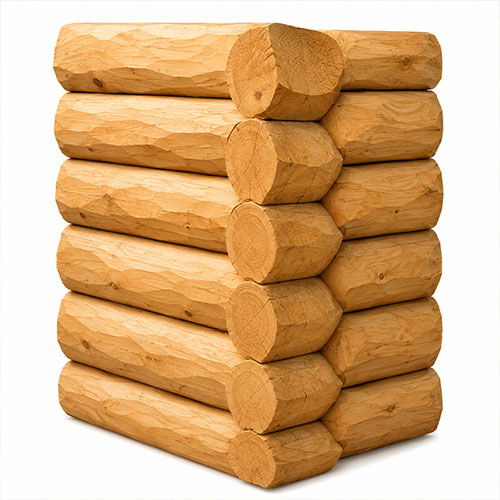
Log cabins and log homes from Battle Creek Log Homes are a different breed of home, combining old-world techniques, workmanship, and materials with cutting-edge designs and features. The result is a beautiful, rustic appearance with incredible strength, durability, and energy efficiency. Check out our log facts and key terms below to learn more about our log systems and the advantages we deliver to homeowners.
Chink Joint

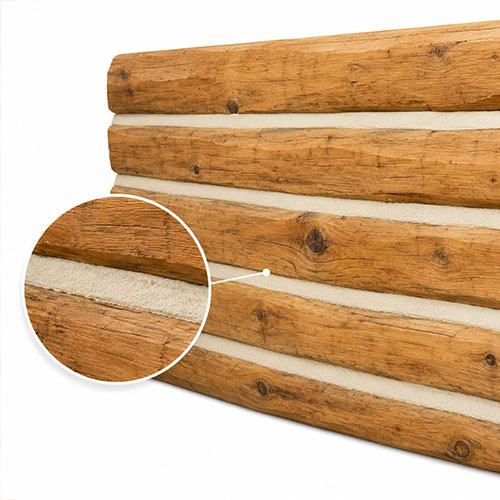
The chink joint refers to a small space between logs, which were filled—or “chinked”—with clay and straw in the past to create a weatherproof seal. Since the earliest days of log cabins, chinking has been employed to enhance log homes’ insulation and comfort. Today, chinking is offered as an option with square logs to create a rustic, old-world appearance. Chink joints are routed into either side of finished logs at 2″ wide and ½” deep to enable filling strictly for visual purposes.

V-Groove

Deriving its name from its distinct shape, the V-groove is beveled into the corner of a log to create a “V” shape when stacked on another log with the same beveling. V-grooved logs are currently very popular with homeowners seeking a more finished and refined texture on the interior walls of their log homes. We offer V-grooves on our D-logs and as an option on our square logs.

Hand Hewing

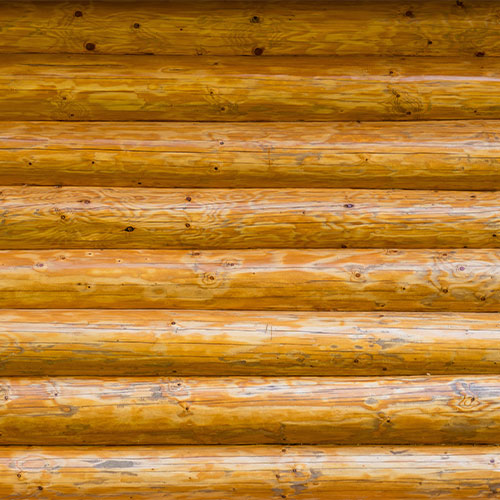
Battle Creek Log Homes is one of just a small handful of companies which still offers the option of authentic hand hewing on our logs. Working with our square logs, our highly-skilled craftsmen finish the exterior surfaces to a one-of-a-kind, highly-crafted look. Hand hewing is a perfect option for customers seeking a rustic, classic Appalachian log home aesthetic with their new log home.

Double Tongue and Groove

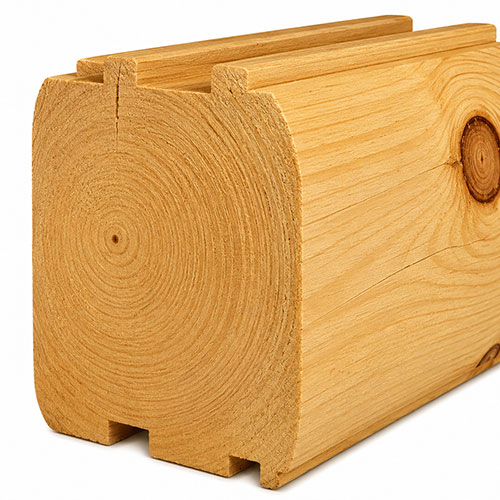
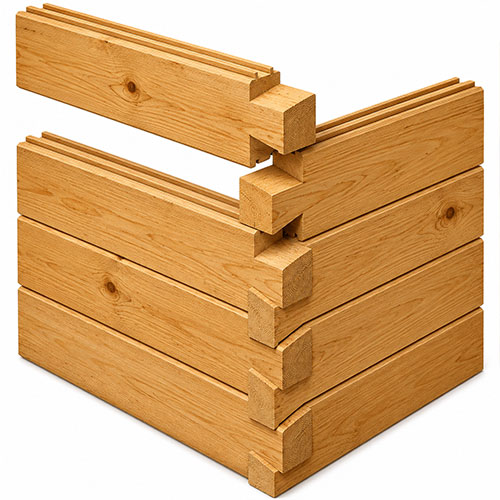
Thoroughly proven to add strength, rigidity, and airflow prevention to the joints between logs, our double tongue and groove system has been incorporated into virtually every log system we sell. Each tongue and groove is enhanced by a weatherproof gasket to ensure a complete airtight seal that will last for many, many years to come. After gaskets are installed, the logs are then screwed together and anchored with an OlyLog lag screw for maximum structural integrity.

Insulation

The Eastern White Pine we use in our log homes is known for its exceptionally high R-value, which is a measure of insulative properties. In general, wood is considered to be an extremely energy-efficient building material due to thousands of tiny air pockets which are trapped in every cubic inch of the cellular structure. These air pockets slow the transfer of heat through the log, helping keep your log home warm in the winter and cool in the summer. Learn more about the advantages of our Eastern White Pine on our White Pine and Kiln Drying page.